
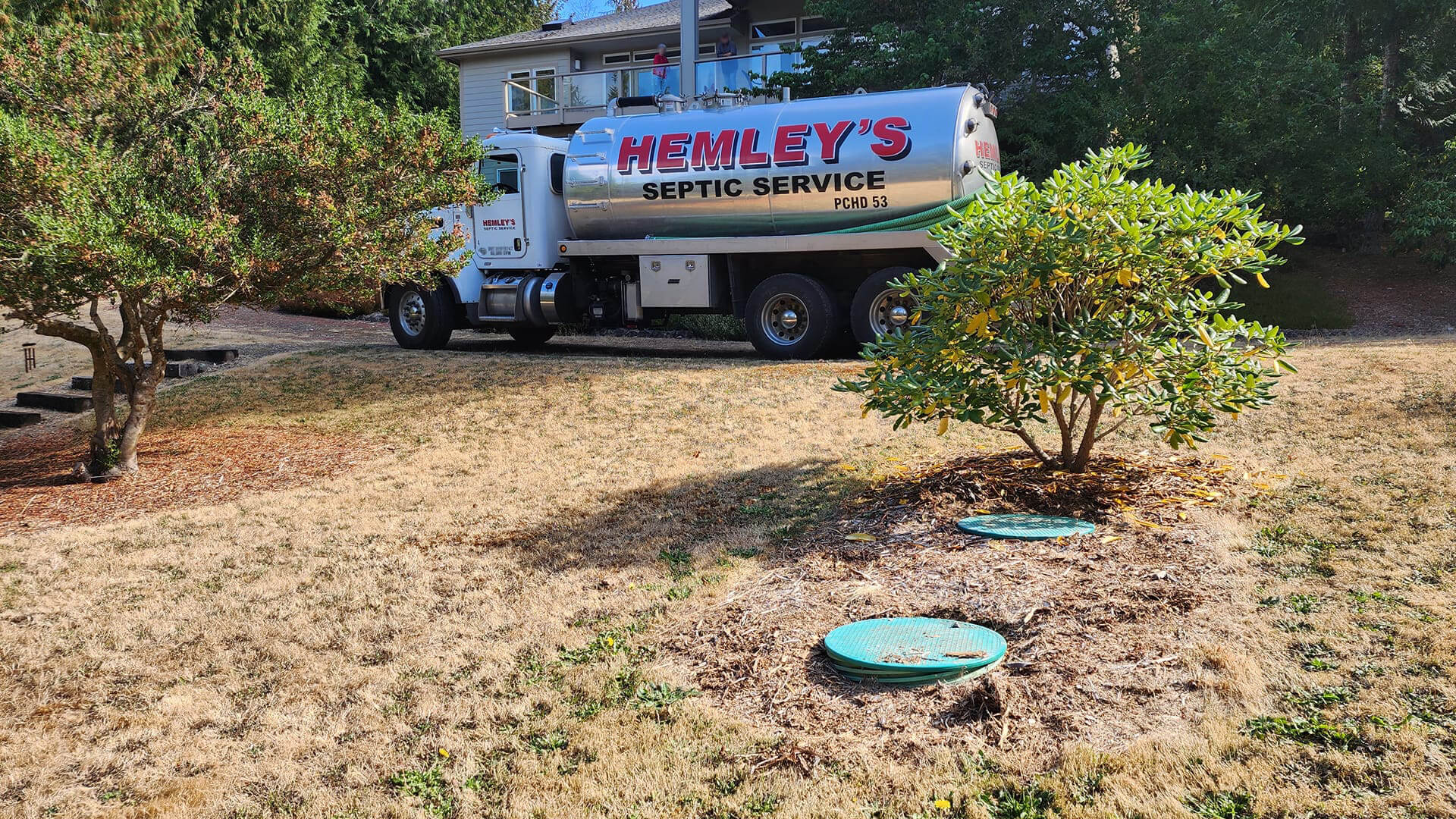
If you live in Kitsap, Mason, or Pierce Counties, you probably paid a premium for the view, the evergreens, and the privacy. But underneath that expensive grass is the most temperamental tenant you’ll ever have: your drainfield.
It’s easy to forget it’s there until it stops working. And in Western Washington, where the ground is basically a saturated sponge for eight months of the year, keeping that system happy is the difference between a relaxing Saturday and an expensive nightmare. Your drainfield acts as the “lungs” of your home; it needs to breathe to filter out the stuff you’d rather not think about.
The problem is that many homeowners treat this part of their yard like a blank canvas for their gardening ambitions. But a drainfield isn’t a garden; it’s a utility. If you plant the wrong tree, the roots will find your system’s drain pipes and choke them out. If you pile on too much mulch or heavy soil, you suffocate the system, and it stops evaporating as it’s designed to. Before you know it, you’ve got a swamp in your yard and a hefty plumbing and restoration bill.
Here is the reality of landscaping in the Pacific Northwest: you want your drainfield to be the most boring part of your property. Here’s how to keep it that way.
Understanding the “Danger Zone” That is Your Drainfield
Before you put a shovel in the ground, you need to understand the engineering you’re standing on. Your drainfield isn’t just a patch of dirt; it’s a biological filter consisting of perforated pipes seated in trenches of gravel or specialized sand.
The system operates on a precise balance of three factors: physical filtration, chemical absorption, and biological decomposition. As liquid effluent trickles out of those pipes, the soil must be porous enough to allow it to move, yet healthy enough to support the bacteria that consume the pathogens.
If you disrupt the soil structure by compacting it with heavy equipment or introducing aggressive roots, you don’t just “clog a pipe.” You kill the biological process. Once that soil becomes “dead” or anaerobic, it can no longer treat the water, and that significant investment you made becomes a soggy, expensive liability.
1. Roots Seek Moisture
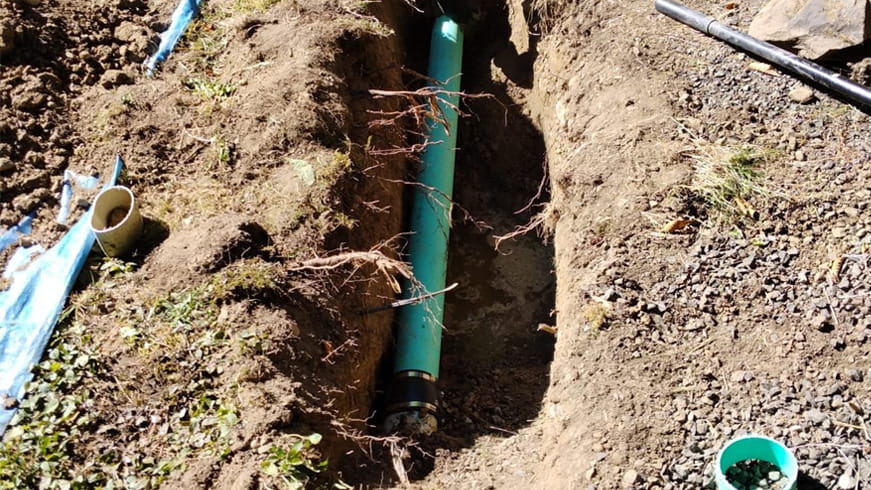
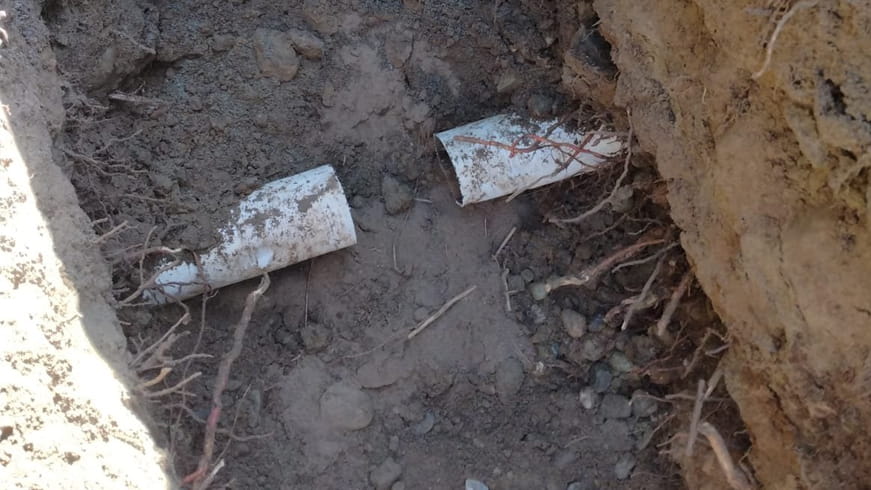
In the PNW, we have surprisingly dry summers. Plant roots aren’t stupid; they can “smell” the constant buffet of nutrient-rich water sitting inside your septic lines. Once a root finds a hole in a pipe, it doesn’t just take a sip; it moves in, invites its friends, and begins forming a massive clog. Sometimes it’s to the point where you need septic repairs.
2. The Suffocation Factor
Your drainfield needs to “breathe” for the effluent to evaporate and the bacteria to work. If you decide to “beautify” the area by hauling in two feet of heavy topsoil or laying down thick plastic weed barriers, you are essentially putting a pillow over the system’s face. If the air can’t get in and the water can’t get out, the whole thing fails. This also includes paving or building over your drainfield, no driveways, patios, courts, or sheds!
What’s Safe to Plant on Your Drainfield?
If you want to play it safe, look for “lazy” plants. You want plants with fibrous, shallow, non-aggressive root systems that are content to stay in the top few inches of soil. They should also be drought-tolerant so that additional watering isn’t required to sustain them.
Choose plants that stabilize the soil and encourage evaporation without sending “scout roots” (also known as Pioneer or Adventitious roots) down into your septic system’s components. These roots are thin, fast-moving feelers that trees, shrubs, and vegetables will send out far beyond their drip line. They seek out moisture and nutrients to help sustain the plant’s continued growth.
Here’s a list of native Washington plants we’ve researched that are safe contenders:
- Native Grasses and Fescues: According to the WSDH, grass is the best cover. It’s not exciting, but it’s the king of the drainfield. Traditional PNW turf or “No-Mow” fescue mixes prevent erosion and help with evaporation without ever threatening your pipes. It’s the safest play you can make and has numerous benefits.
- Bunchberry (Cornus Canadensis): A stunning native groundcover that acts like a carpet for your yard. It thrives in the acidic soil of the PNW and stays low to the ground, using shallow rhizomes to spread rather than deep, plunging roots that might interfere with your system.
- Kinnikinnick (Arctostaphylos Uva-ursi): A perennial PNW native superstar. It’s an evergreen groundcover with berries that forms a low, thick mat. It thrives in our acidic soils and has very shallow roots.
- Miner’s Lettuce (Claytonia Perfoliata): This native PNW annual is a “set it and forget it” option. It has a tiny, delicate root system that couldn’t damage a pipe if it tried, and it naturally re-seeds itself every year.
- Perennial Flowers: If you want color, stick to herbaceous perennials like Hardy Geraniums, Coneflowers, or Daylilies. These die back in the winter, meaning their root systems don’t become woody or aggressive.
- Sword Ferns (Polystichum Munitum): These perennials are the quintessential PNW vibe. While they are hardy, their root systems are relatively fibrous and manageable (slow-growing). Just try to keep them toward the outer edges of the field rather than directly over the lines. You can also consider planting Deer and Lady Ferns.
- Wild Ginger (Asarum Caudatum): Another native perennial in the PNW that thrives in shady areas. It forms a spreading ground cover with small, heart-shaped leaves and shallow underground stems.
- Wild Strawberry (Fragaria Vesca): Great for erosion control. They spread fast and look nice, with pretty white flowers, but they don’t have the “search and destroy” mentality of larger plants.
What Should You Avoid Planting on Your Drainfield?
In Western Washington, we are blessed with massive, fast-growing trees. Unfortunately, those trees are the natural enemies of your septic system.
- Willows, Poplars, Cottonwoods, and Maples are notorious for seeking out moisture. They can “smell” the water in your septic lines from a distance and will grow into the pipe perforations, completely clogging the system and even destroying components outright.
- Evergreen Giants: While we love our Douglas Firs and Western Red Cedars, they should be kept at least 30 feet away from your drainfield. Their root systems are expansive and can easily tip the delicate balance of your soil.
- Vegetable Gardens: This is a common mistake. You should never plant a vegetable garden over a drainfield. Unless you want a side of E. coli with your dinner, keep the edibles in raised beds far away. Additionally, vegetable gardens require frequent tilling and watering, both of which can damage the drainfield.
While this isn’t a comprehensive list, we’ve highlighted the usual suspects; don’t assume that if a plant isn’t on this list, it’s safe to plant. Try and think of it this way: if a plant is known for being “vigorous,” “fast-growing,” or “drought-hardy,” it usually achieves those titles by having a massive, aggressive root system. In the world of septic maintenance, “vigorous” is just a polite word for “expensive.”
Landscaping Maintenance Tips to Help Your Drainfield
In Western Washington, the sky does about 80% of your yard work for you, but that doesn’t mean you can just walk away. If you live in the rainy corridor of the Kitsap Peninsula or the shadow of Mt. Rainier, you have to manage your drainfield with a specific kind of “hands-off” intensity.
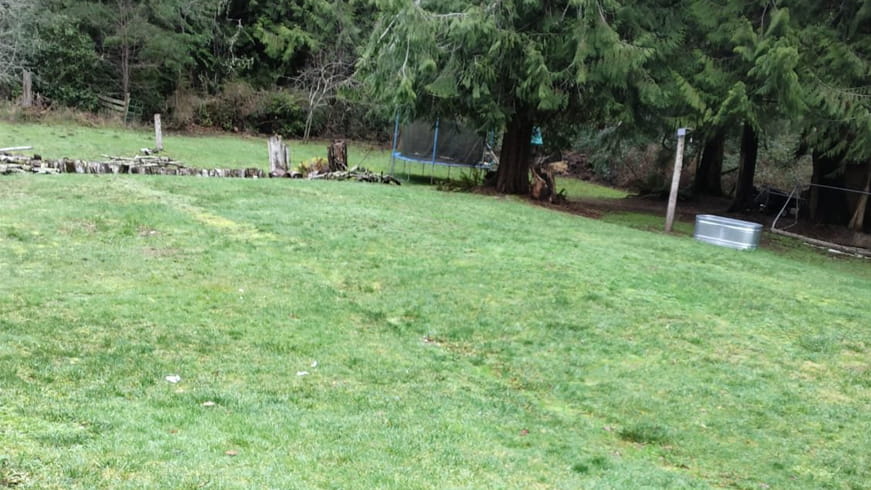
Here’s how to maintain your subterranean investment without accidentally sabotaging it.
1. Stop Overwatering
We live in a place where “partly sunny” is a bald-faced lie. Your drainfield is already processing hundreds of gallons of water from your showers, toilets, and laundry every week, as it was designed for. Adding a high-powered sprinkler system into that mix during a July heatwave is overkill and not what it was designed for.
If the grass over your pipes turns a bit brown in August, let it. It’s dormant, not dead. If the grass over your drainfield is lush, vibrant, and emerald green while the rest of your yard looks like a hayfield, don’t celebrate. That usually means your pipes are leaking too much “fertilizer” too close to the surface.
2. The “No-Fly Zone” for Heavy Objects
Your drainfield is not a parking lot, a staging area for your firewood delivery, or the perfect spot for that new hot tub. Soil compaction is the silent killer of septic systems.
When you squash the soil, you squeeze out the oxygen that the “good” bacteria need to survive. So keep the F-150, the livestock, and the heavy construction equipment off the field. If you wouldn’t want someone standing on your chest while you’re trying to breathe, don’t do it to your drainfield.
3. Mulch Like a Minimalist
I know, the “Big Box” stores sell “Beauty Bark” by the truckload. Resist the urge. Thick layers of heavy bark or wood chips create an acidic, waterproof blanket that prevents moisture from “venting” from the soil.
If you need to mulch around your new Bunchberries or Wild Ginger, use a very thin layer (less than 2 inches) of light compost or fine wood mulch. You want the soil to breathe, not suffocate under a designer rug.
4. Find Your Septic System “As-Built”
Before you do anything, find your “As-Built” drawing. This is the map the county or the original installer drew, showing exactly where your septic system is and its specifications. If you don’t have one now, you can usually find it online through each county’s online portals:
Once you have your As-Built, print it out, laminate it, and keep it in the garage. It’s the only map you’ll ever own where “X” marks the spot you should never, ever dig.
When it Comes to Septic Drainfield Landscaping: Boring is Beautiful
Landscaping your drainfield doesn’t have to be boring, but it does have to be smart. By sticking to native groundcovers and keeping the “big timber” at a distance, you ensure that your septic system and your wallet remain healthy for decades to come.
Have an issue or question about your septic system, or need assistance getting your As-Built? Just reach out, and we’ll be glad to help.