
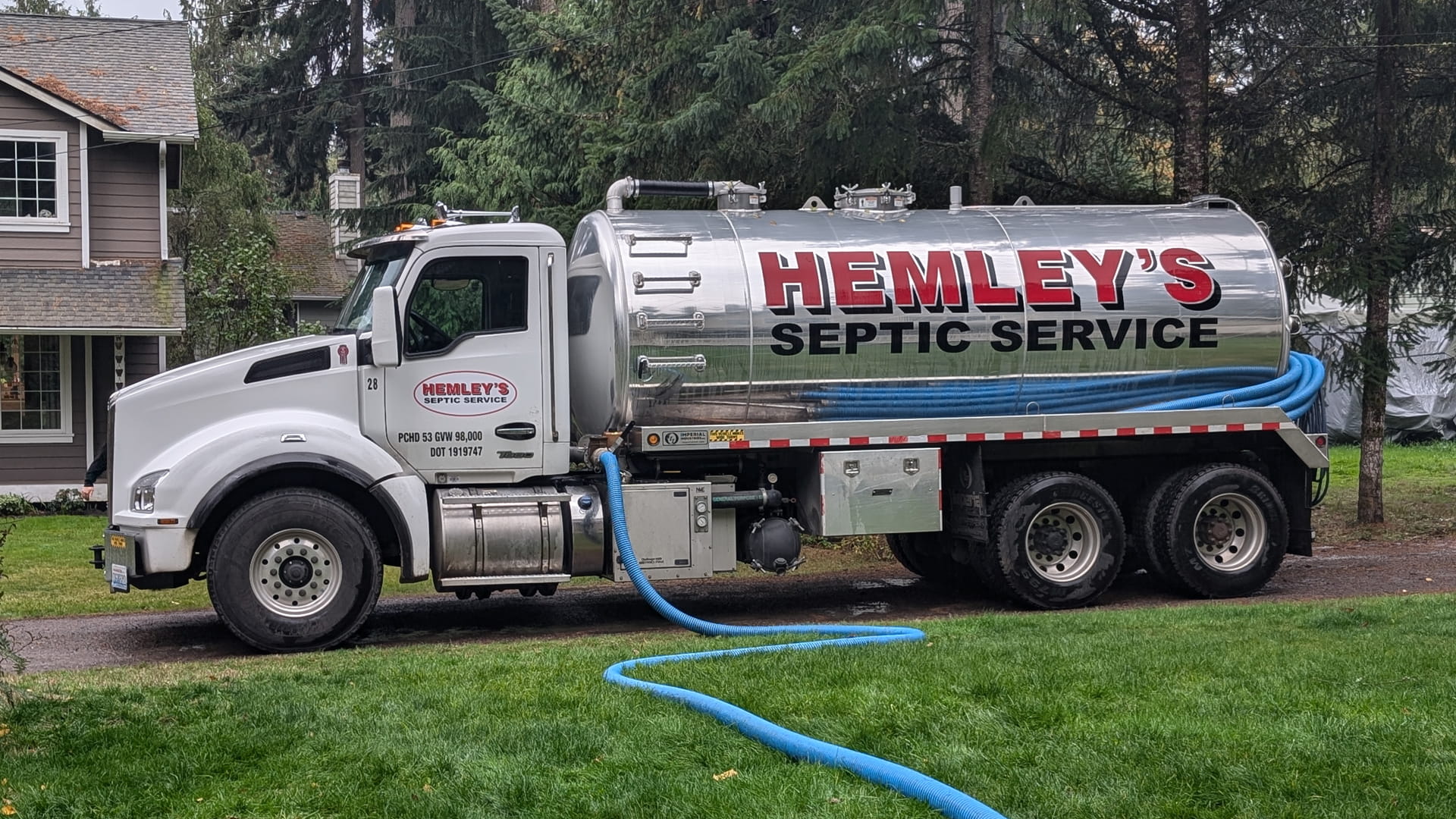
If your home has a septic system, you’ve probably heard many opinions on its upkeep. Some neighbors insist on yearly cleaning, while that one uncle claims he hasn’t touched his tank since the Bush administration. It’s enough to make any homeowner uneasy. Nobody wants to deal with underground septic issues, that is, until they surface on the lawn.
Before you settle on any single approach, it’s important to understand that maintaining a septic tank isn’t a one-size-fits-all schedule. The truth of the matter is that the maintenance schedule for pumping and cleaning a septic tank depends on multiple variables, which include:
- Household Size
- Water Usage Habits
- Garbage Disposal Use
- Septic System Type
- Septic Tank Size(s)
- Sludge & Scum Levels
For most households, septic tanks should be pumped every 3 to 5 years—but that timeline can change significantly based on how your home uses the system and if there’s items going into the septic tank that shouldn’t be.
The Magic Formula: Capacity vs. Usage
So, how do you figure it out? Determining your pumping frequency comes down to a simple calculation: the number of people in your home and the size of your tank.
A septic tank’s primary job is to act as a settling chamber. It holds wastewater long enough for solids to settle to the bottom (sludge) and for fats, oils, and grease to float to the surface (scum). This creates a “clear zone” of effluent in the middle.
But what happens if you have a small, 750-gallon tank and a family of six? Or you host a large party? That “settling time” (known as retention time) gets cut short because the tank is constantly being flushed with new water. Without enough time to settle, those solids can get pushed right out into your drainfield.
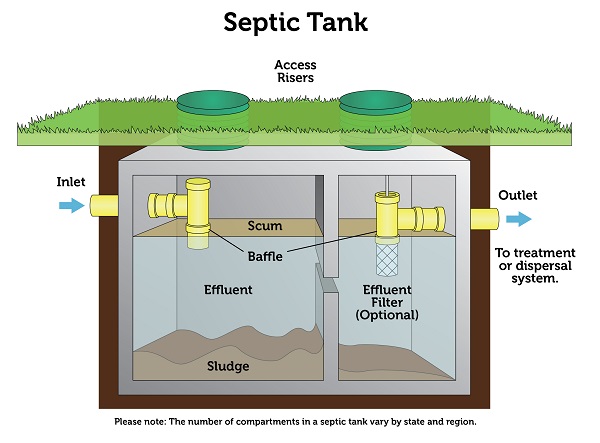
Image Source: TCPHD
The Average Rule: Why 3–5 Years?
Given all that, you might wonder what the general guidance actually is. You will hear the 3- to 5-year window cited by the EPA, local health departments such as TCPHD, Kitsap, and Mason Counties, and industry experts. This isn’t an arbitrary number. It’s based on the average accumulation rate for a standard American family.
In a typical 1,000-gallon septic tank, it generally takes about three to five years for the sludge and scum layers to occupy one-third of the tank’s operational volume. Once you hit that one-third mark, the risk of solids carryover, where waste escapes the tank and enters your drainfield, increases exponentially.
Variables That Change the Math
While the 3 to 5 year rule is a great baseline, numerous variables can accelerate your timeline:
1. Sludge & Scum Levels
This is the ultimate “real world” metric. The sludge (the heavy stuff at the bottom) and the scum (the fats, oils, and greases at the top) eventually squeeze the “clear zone (effluent)” in the middle. Once these layers take up about one-third of your tank’s total volume, the system can no longer effectively separate waste. Monitoring these levels is the direct way to know for sure if it’s time for a pump-out.
2. Household Size
It’s a simple guest-list problem: more people mean more “input.” A septic system for a family of five handles significantly more wastewater and solids than a system for a retired couple. The more people using the facilities, the faster those solids accumulate, shrinking the time between necessary pump-outs.
3. Water Usage Habits
Your tank needs “quiet time” to allow solids to settle to the bottom. If your household runs the dishwasher, the washing machine, and three showers all at once, you’re creating a miniature storm inside your septic tank. This turbulence keeps solids suspended in the water, increasing the risk of pushing them out into your drainfield before they’ve had a chance to settle.
4. Garbage Disposal Use
While convenient, garbage disposals are often a septic system’s worst enemy. They introduce finely ground organic matter that wouldn’t otherwise be there, increasing the “solids load” by as much as 50%. If you use your disposal daily, you should expect to pump your tank much more frequently, often every 1 to 2 years, to be safe.
5. Septic System Type
Not all systems are created equal. A standard gravity system is fairly straightforward, but more complex setups, such as aerobic treatment units (ATUs) or pressure distribution systems, have mechanical components and filters that require more frequent inspection. Some advanced systems even have “trash tanks” that need to be cleared out more often than the main treatment tank. These systems rely on mechanical and biological processes that are more sensitive to neglect.
6. Septic Tank Size
Size definitely matters here. A 1150-gallon tank offers a larger “buffer” than a 750-gallon tank found in an older home. If your tank is undersized for your home’s current occupancy, it will reach that critical “one-third full” mark much faster, requiring a tighter maintenance window to prevent overflows.
The Cost of Waiting: $500 vs. $15,000
It can be tempting to ignore septic maintenance since problems often go unnoticed until it’s too late, but the financial risk is steep.
A professional pumping service in Washington State typically costs around $500 or more. Think of this as a low-cost insurance policy for your home. If you neglect the tank and solids clog your drainfield, the system can fail entirely. Replacing a leach field or installing a new system usually starts at $15,000 and can climb much higher depending on your soil and local laws.
The Bottom Line
Septic problems rarely give much warning. By sticking to a recurring maintenance schedule, you protect your property value, avoid emergencies, and extend the life of your system.
Unsure when your tank was last serviced? Contact Hemley’s Septic today! We’ll help you set the right schedule so you can focus on life above ground.